
Field Notes
Plain-language notes on components, circuits and how to read a schematic, written for people at the bench, not for a classroom.
Field Notes
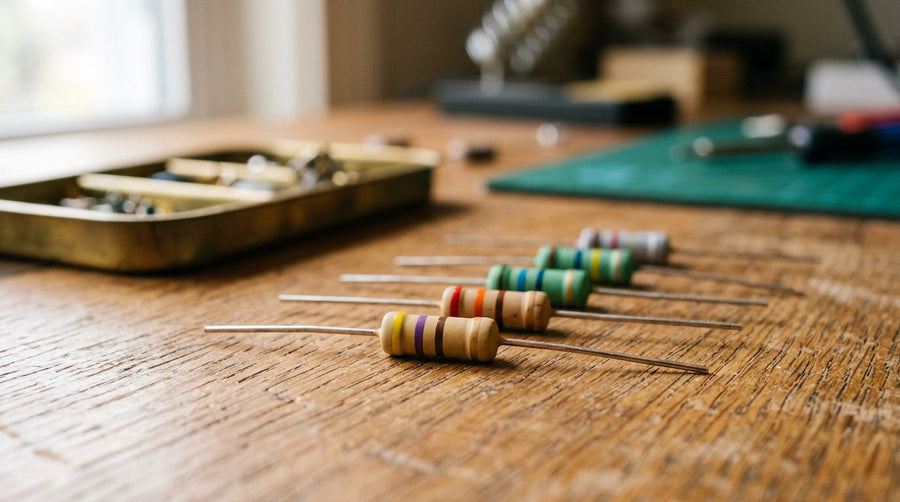
Reading resistor colour bands without a chart
Small resistors are too small to print numbers on, so their value is painted on as coloured bands. The code looks arbitrary until you notice the middle of it is simply...
Read more →
Series and parallel: two ways to connect anything
However complicated a circuit looks, its parts are joined in only two basic ways: one after another, or side by side. Learn what each does to voltage and current and y...
Read more →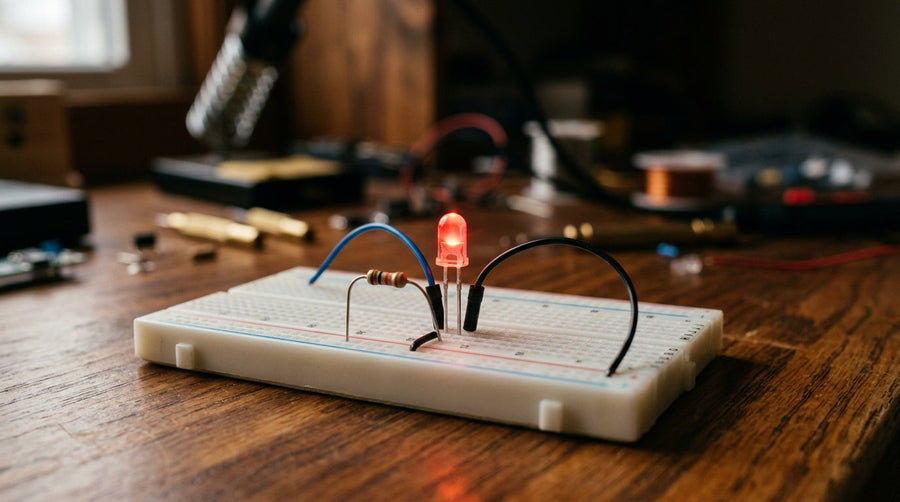
Why every LED needs a resistor
Connect an LED straight across a 9 volt battery and it will flash once and die. The LED is not faulty. It was simply given no limit, and an LED will not limit current ...
Read more →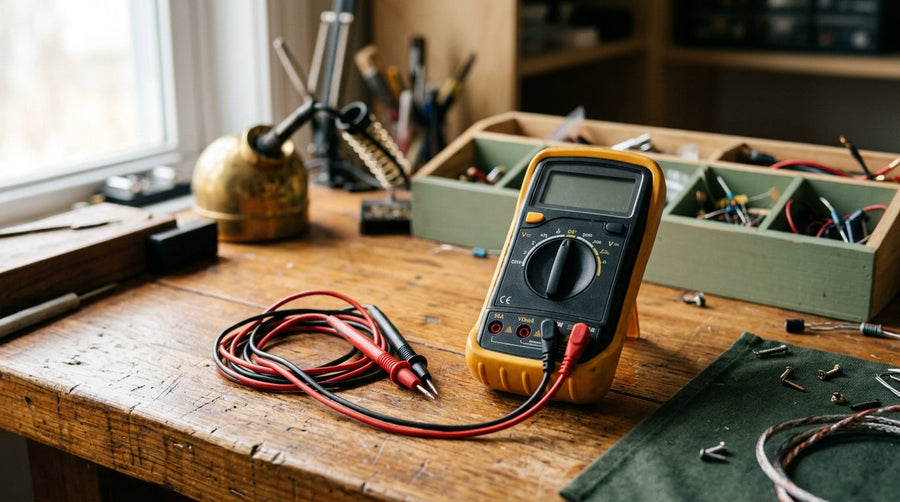
Choosing a first multimeter
A multimeter is the first instrument to buy, and you do not need an expensive one to build battery-powered circuits. You do need the right handful of functions, and a ...
Read more →
How to read a schematic, one symbol at a time
A schematic is not a picture of a circuit. It is a map of what connects to what. The position of a symbol on the page says nothing about where the part sits on the boa...
Read more →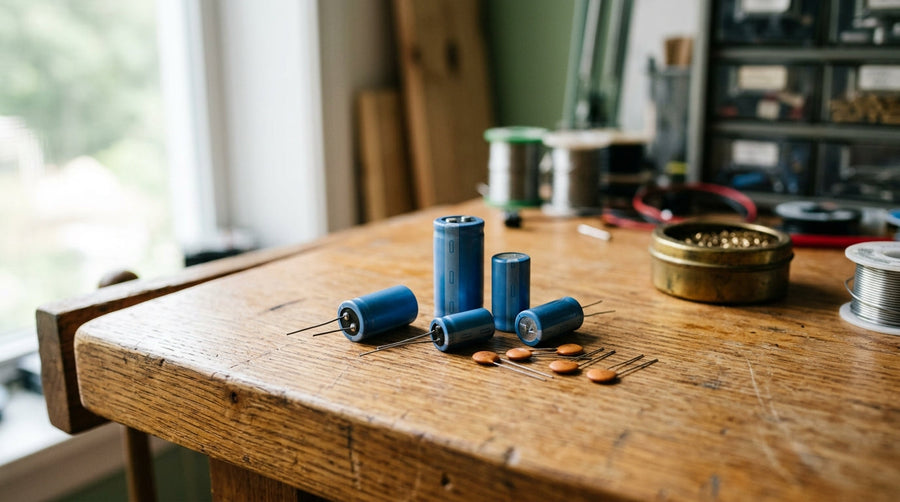
What a capacitor actually does
A resistor is easy to picture: it limits current. A capacitor is harder, because what it does depends on time. The short version is that a capacitor stores a small amo...
Read more →Electronics, in plain language.
Occasional notes on components, circuits and projects worth building. No hype, unsubscribe anytime.
We never share your email.
Read it at your own bench first.
Then decide.
30-day money-back guarantee, free shipping