
Field Notes
Plain-language notes on components, circuits and how to read a schematic, written for people at the bench, not for a classroom.
Field Notes
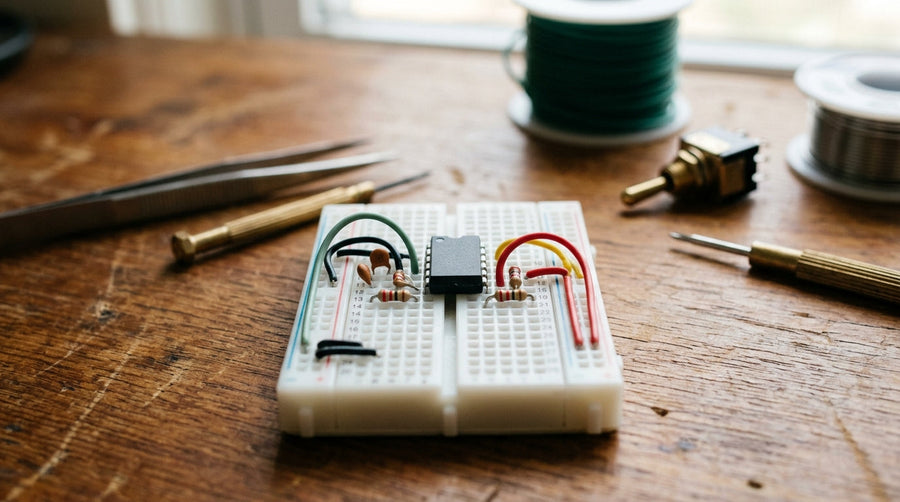
What an op amp does
The operational amplifier is the building block of analogue electronics. It looks like any other eight-pin chip, and its job can be said in one sentence: it amplifies ...
Read more →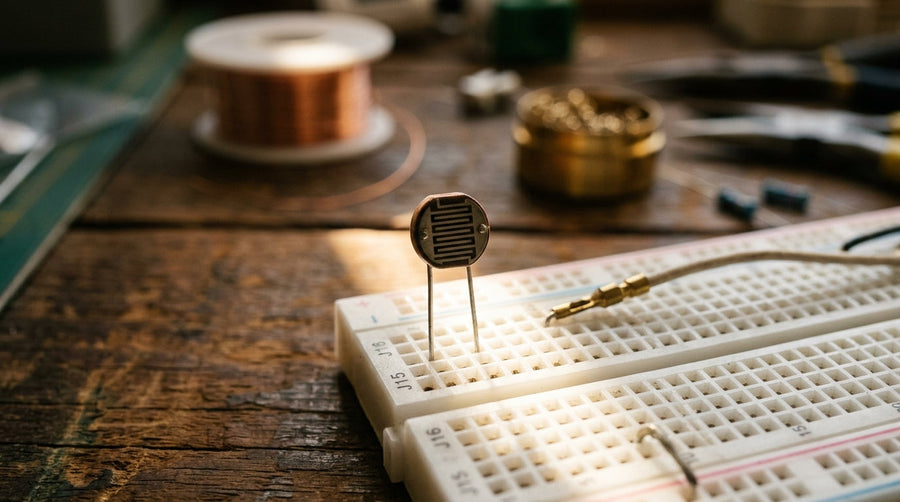
Light-dependent resistors: a first sensor
A light-dependent resistor, also called an LDR or photoresistor, is about the simplest sensor there is. It has two leads, no polarity, and one behaviour: its resistanc...
Read more →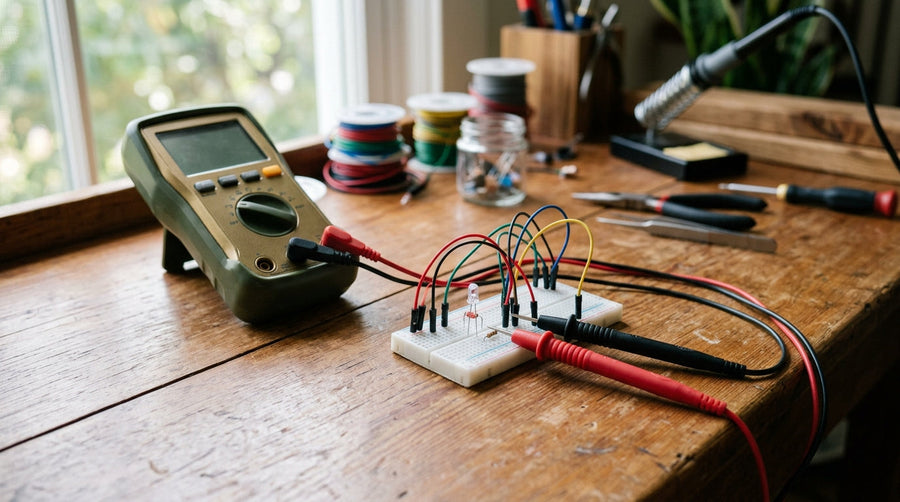
How to debug a circuit that does nothing
Every builder knows the moment: the last wire goes in, the battery goes on, and nothing happens. A dead circuit is almost never a mystery. It is usually one of a short...
Read more →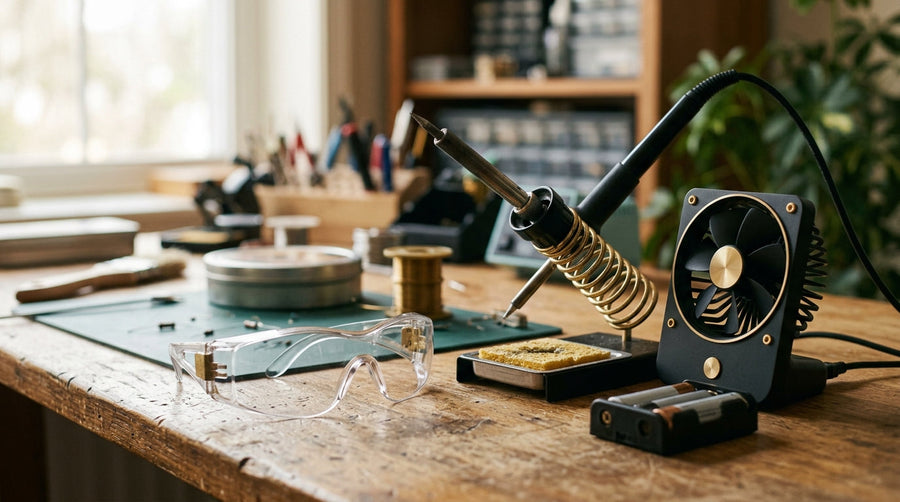
Bench safety for low-voltage projects
Battery-powered electronics is one of the more forgiving hobbies you can pick up. A 9 volt battery will not hurt you through dry skin. The things that do cause injurie...
Read more →
What a 555 timer actually does
The 555 is an eight-pin chip that turns a resistor and a capacitor into a time delay. It has been in production since the early 1970s and is still one of the most used...
Read more →
What to buy for your first breadboard circuit
You do not need much to start building circuits, and most of it is cheap.The short list A solderless breadboard and a pack of jumper wires. A 9 volt battery with a sna...
Read more →Electronics, in plain language.
Occasional notes on components, circuits and projects worth building. No hype, unsubscribe anytime.
We never share your email.
Read it at your own bench first.
Then decide.
30-day money-back guarantee, free shipping