
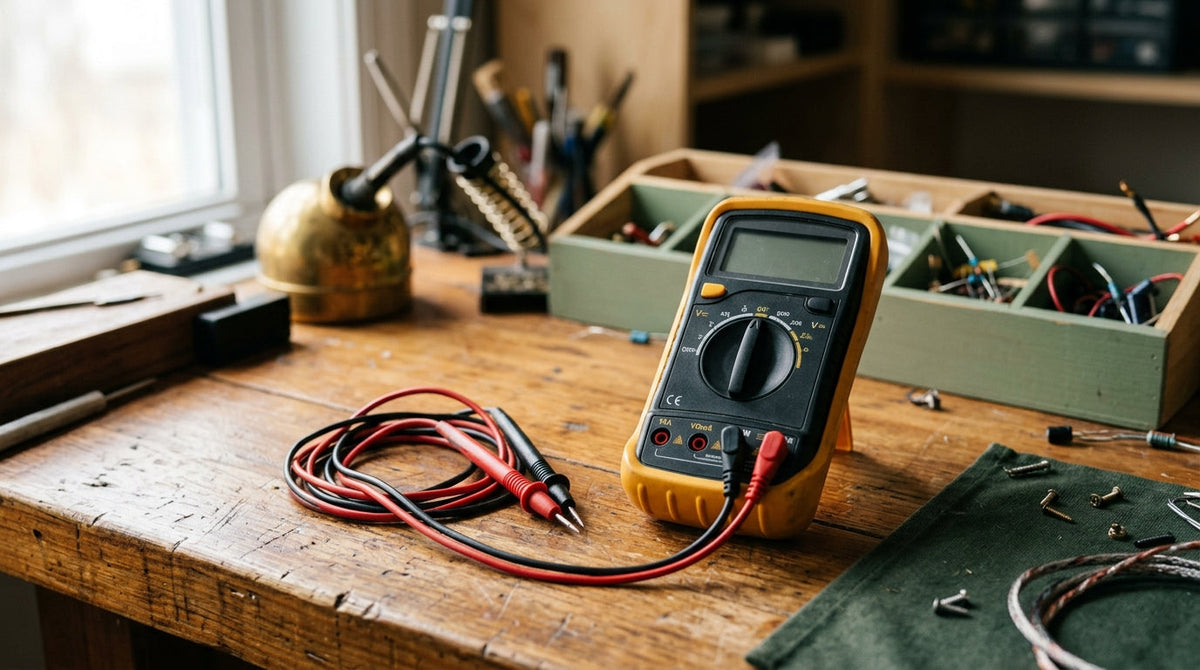
A multimeter is the first instrument to buy, and you do not need an expensive one to build battery-powered circuits. You do need the right handful of functions, and a clear idea of what a cheap meter should never be used for.
Functions that matter
- DC voltage. The one you will use most.
- Resistance. For checking resistor values and finding broken connections.
- Continuity with a beeper. Touch two points and it beeps if they are joined. Invaluable on a breadboard.
- DC current in milliamps. For finding out what a circuit really draws.
- Diode test. Tells you which way round a diode or LED is, and whether it works.
Auto-ranging is a convenience worth having: the meter picks the scale for you.
Three rules for using one
Measure voltage across a part, with the circuit powered. Measure current by breaking the circuit and putting the meter in the gap. Measure resistance only with the power off.
For current, the red lead usually moves to a separate socket. Move it back afterwards. Leaving it there and then measuring voltage is the classic way to blow the meter's fuse.
A word on safety ratings
Meters carry a category rating that describes what they can safely measure. For low-voltage hobby work almost any meter will do. Measuring mains electricity is a different matter that calls for a properly rated meter and proper training, so treat a budget meter as a battery-circuit tool only.
If you want the fundamentals in one place, with hand-drawn diagrams, start with Getting Started in Electronics, or browse all four books.