
Field Notes
Plain-language notes on components, circuits and how to read a schematic, written for people at the bench, not for a classroom.
Field Notes
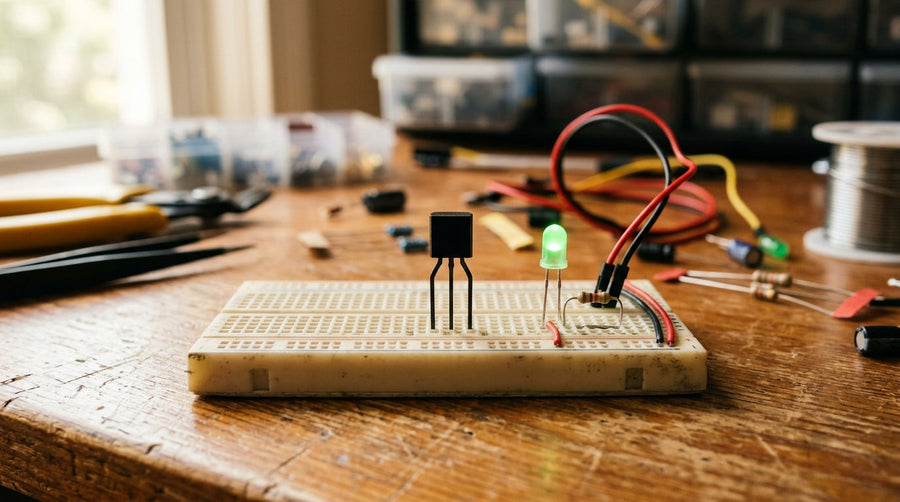
The transistor as a switch
A transistor can amplify, but the first thing most people use one for is simpler: letting a small current switch a larger one. That is how a chip that can supply a few...
Read more →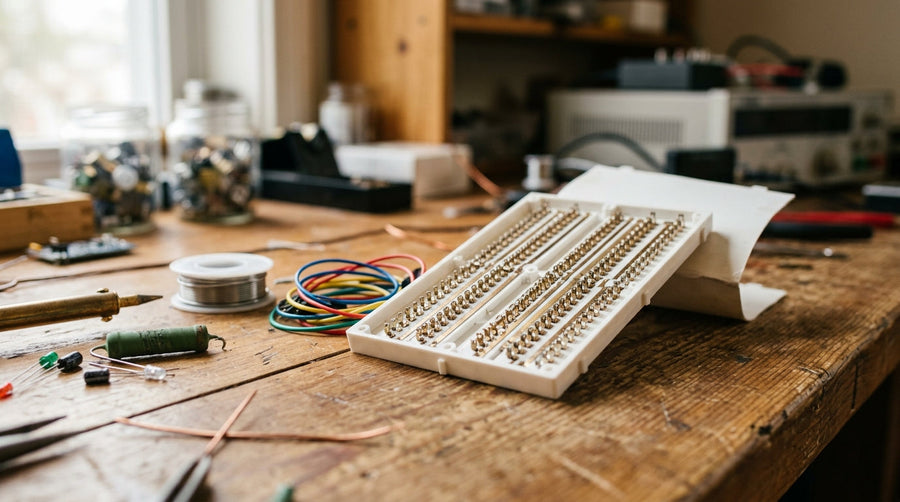
How a breadboard is wired inside
A solderless breadboard lets you build a circuit by pushing parts into holes. It only makes sense once you know which holes are connected to which, because nothing on ...
Read more →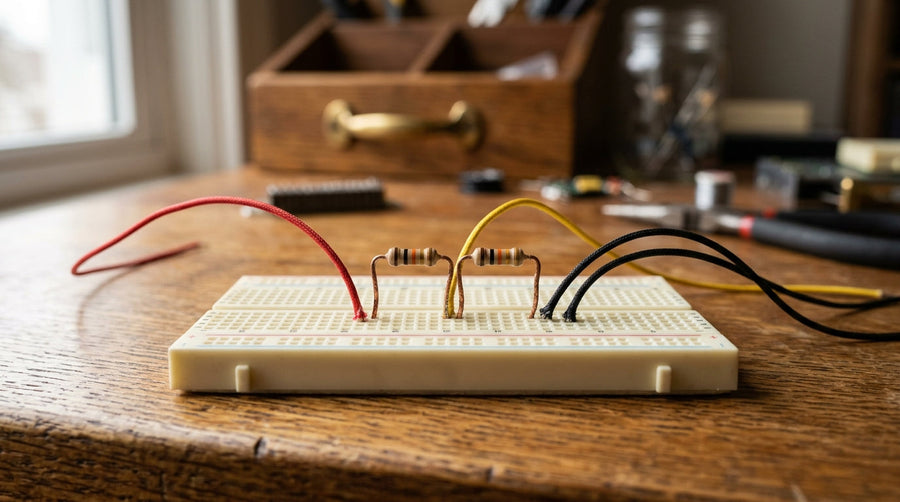
The voltage divider: two resistors, one useful trick
Put two resistors in series across a supply, and the voltage at the point where they meet is a fixed fraction of the supply. That is a voltage divider, and once you ca...
Read more →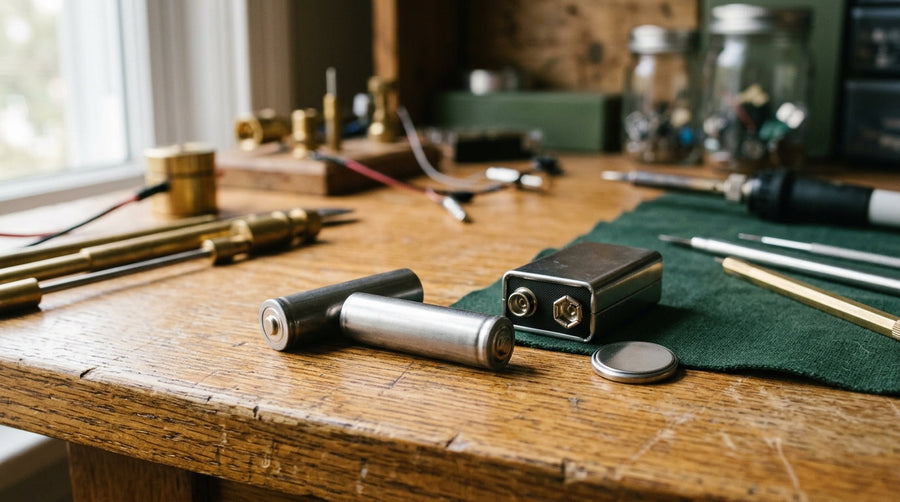
Batteries, voltage and milliamp-hours
Two numbers describe a battery for a hobbyist: how hard it pushes, and how long it lasts. The first is voltage. The second is capacity, measured in milliamp-hours. Vol...
Read more →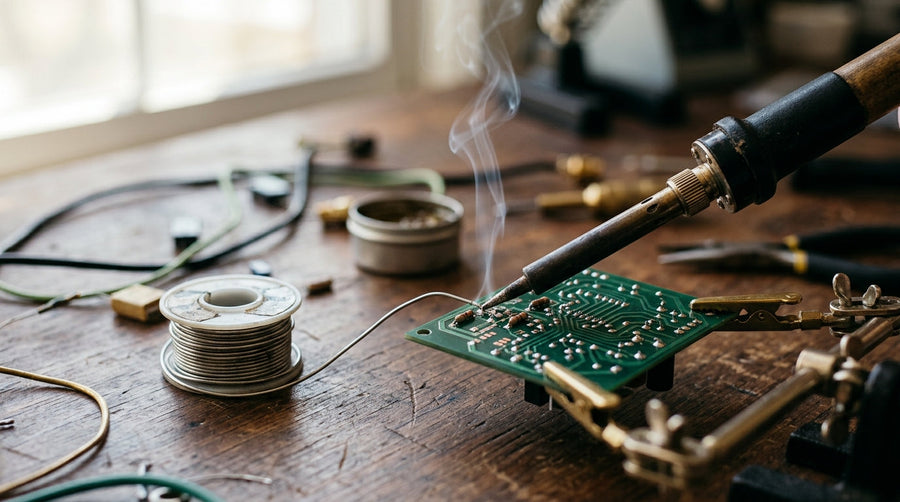
Five soldering habits worth learning early
Soldering is a physical skill, and like any physical skill it is easier to learn properly once than to unlearn later. These five habits cover most of what separates a ...
Read more →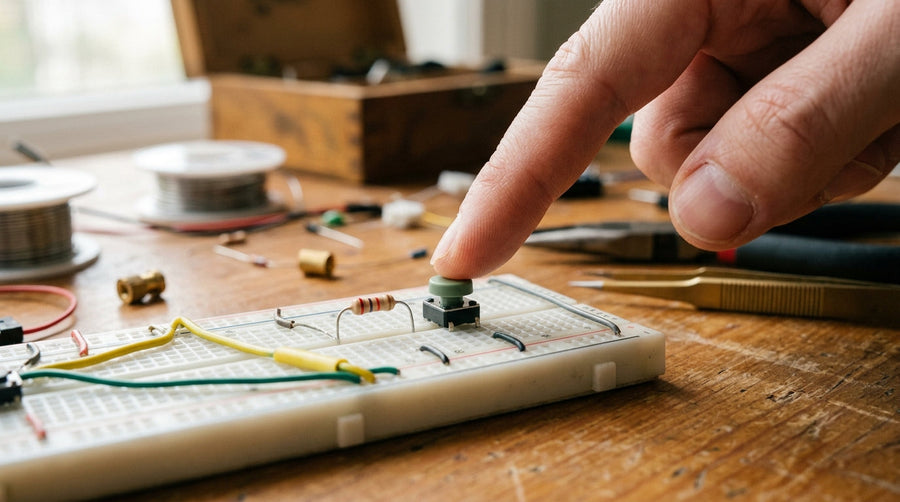
Pull-up and pull-down resistors explained
Connect a push button between a logic input and ground, and you might expect the input to read "high" until you press the button. It will not, at least not reliably. W...
Read more →Electronics, in plain language.
Occasional notes on components, circuits and projects worth building. No hype, unsubscribe anytime.
We never share your email.
Read it at your own bench first.
Then decide.
30-day money-back guarantee, free shipping